


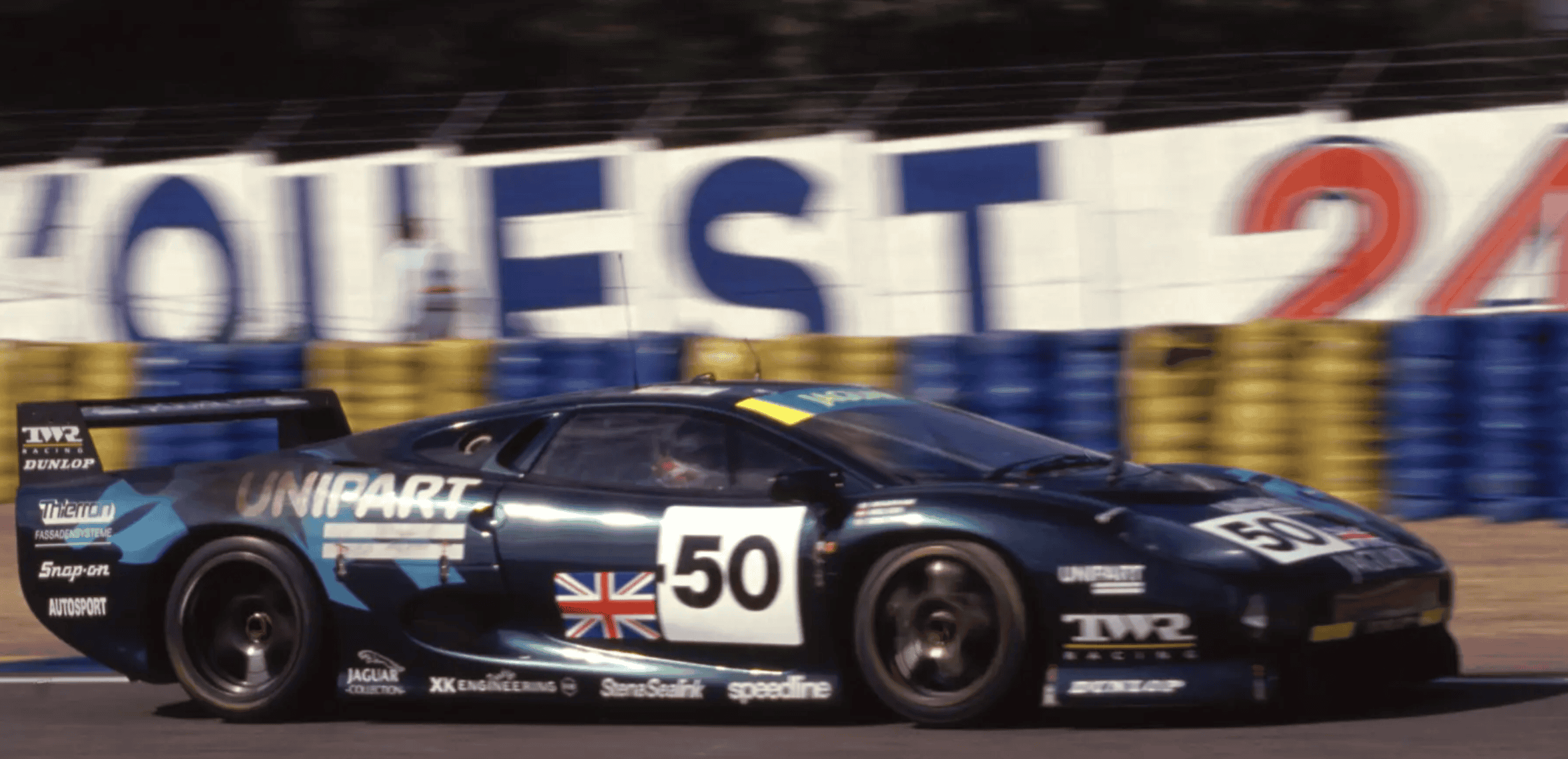
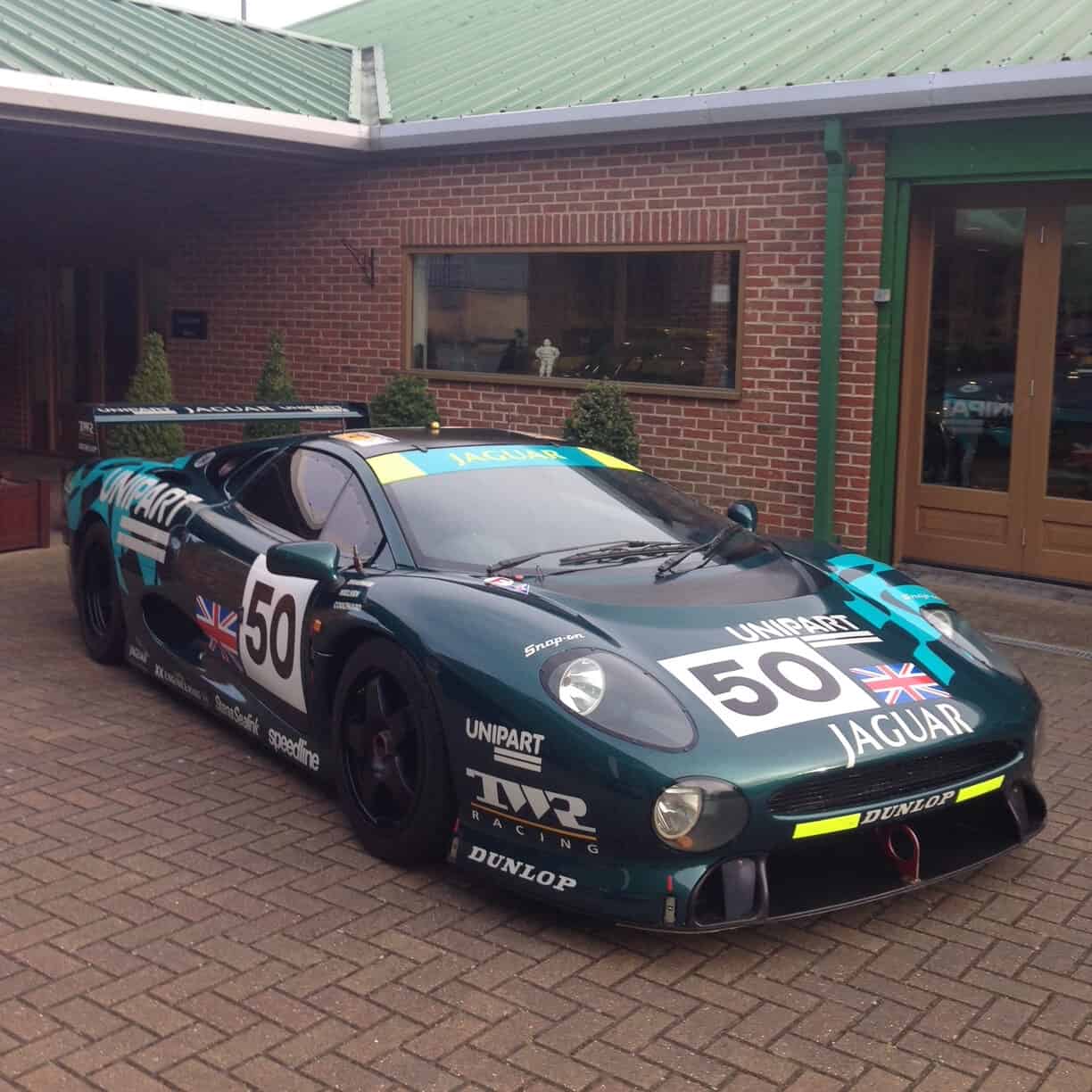
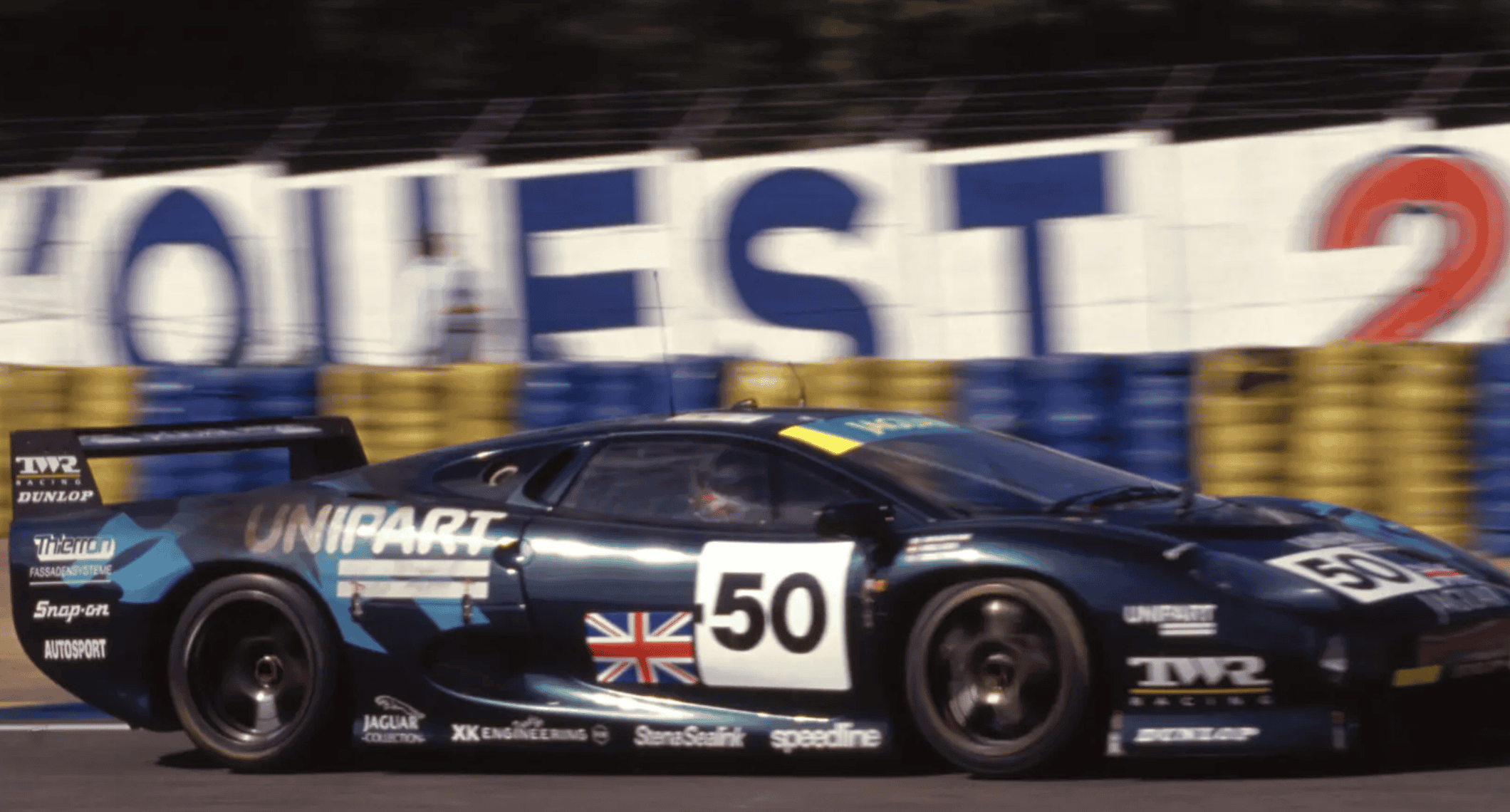
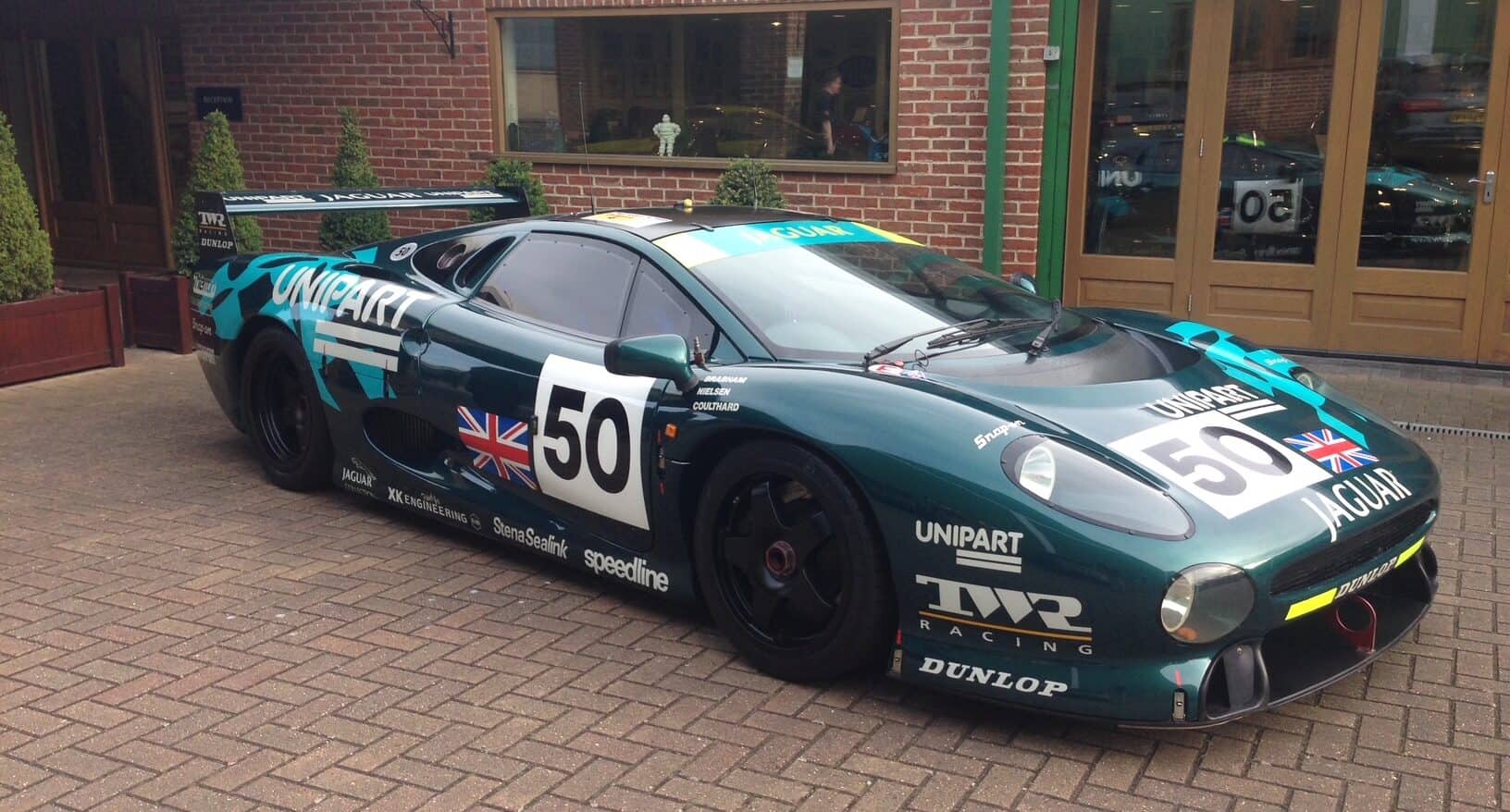
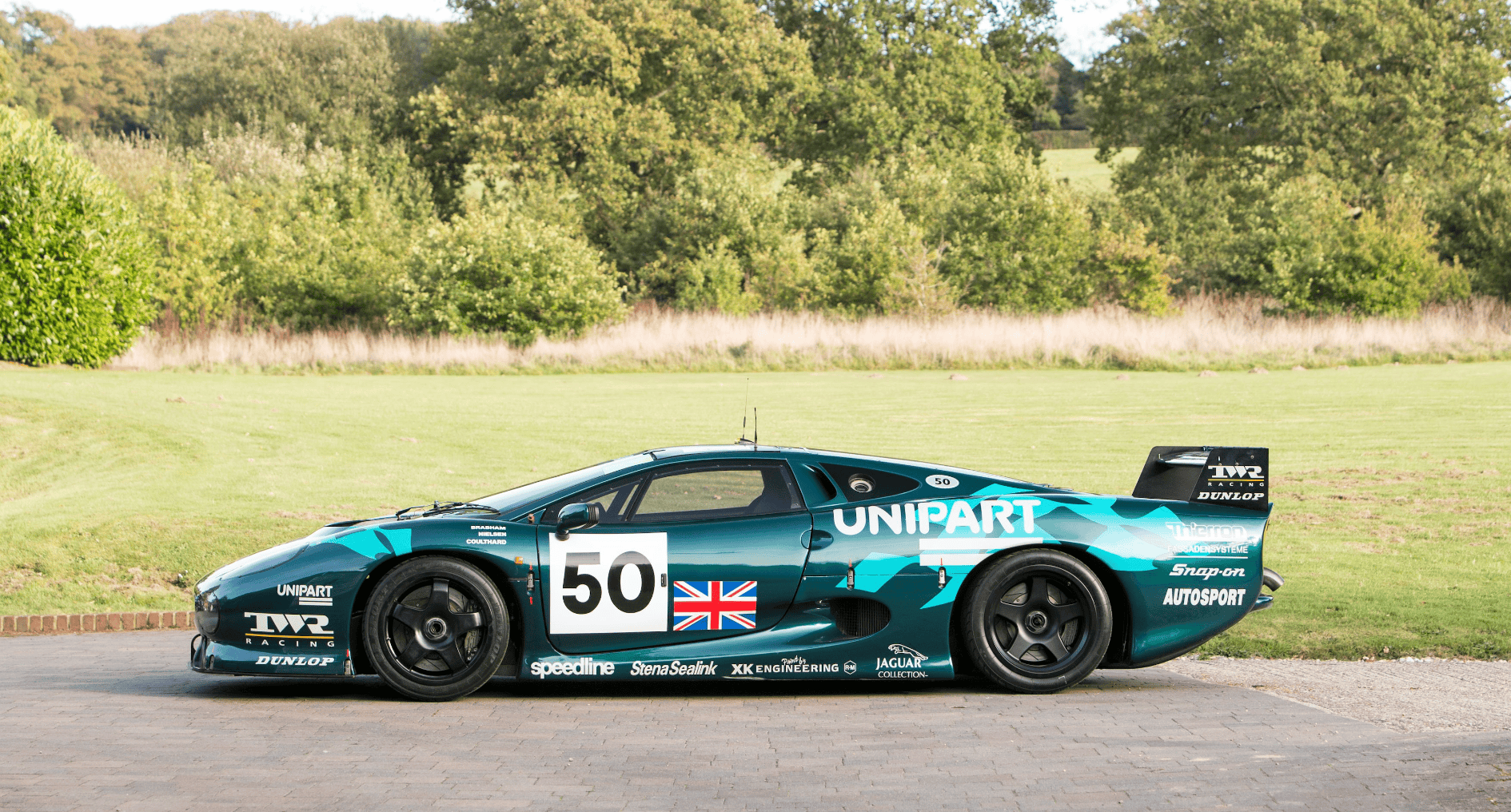
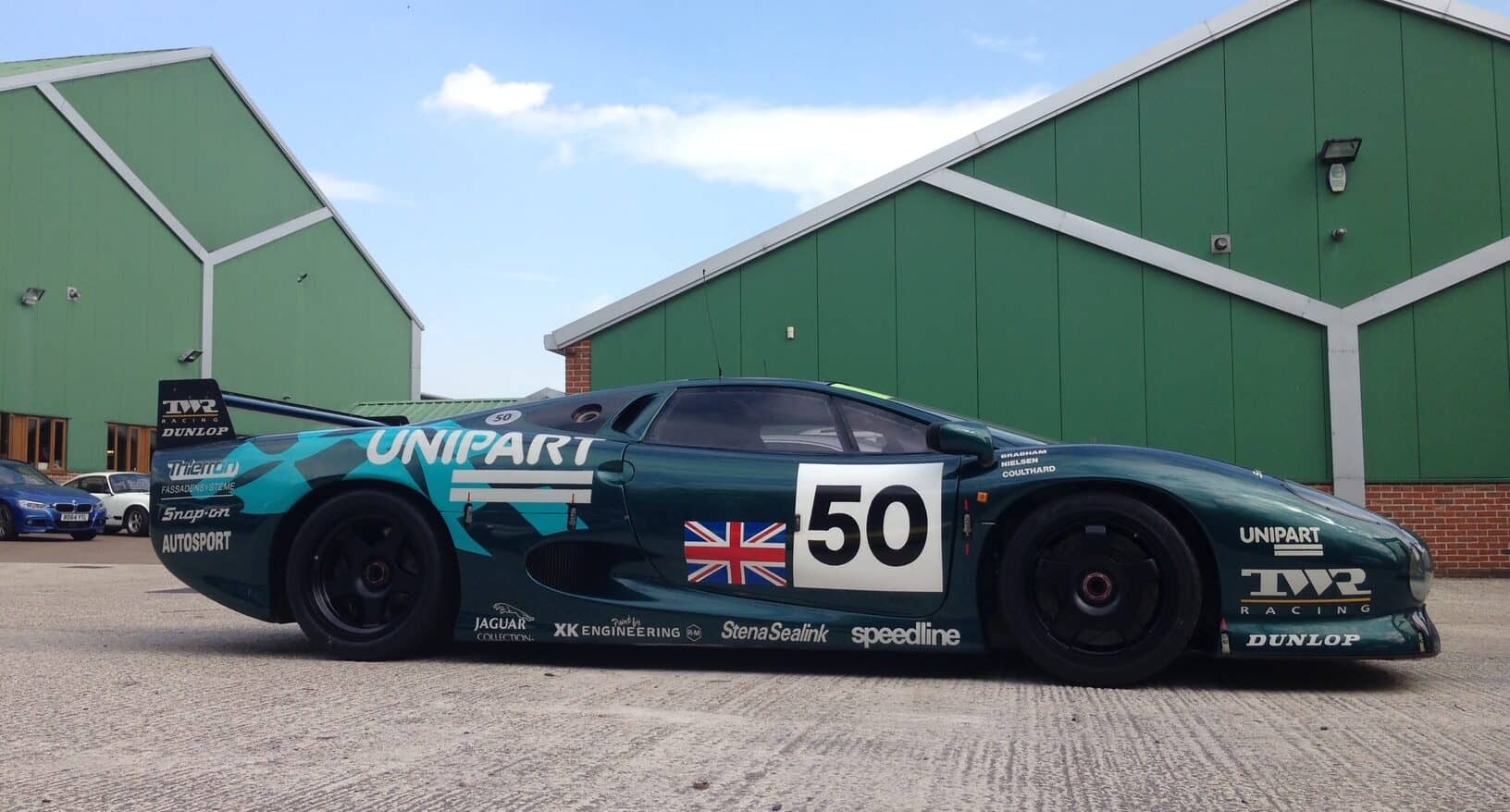
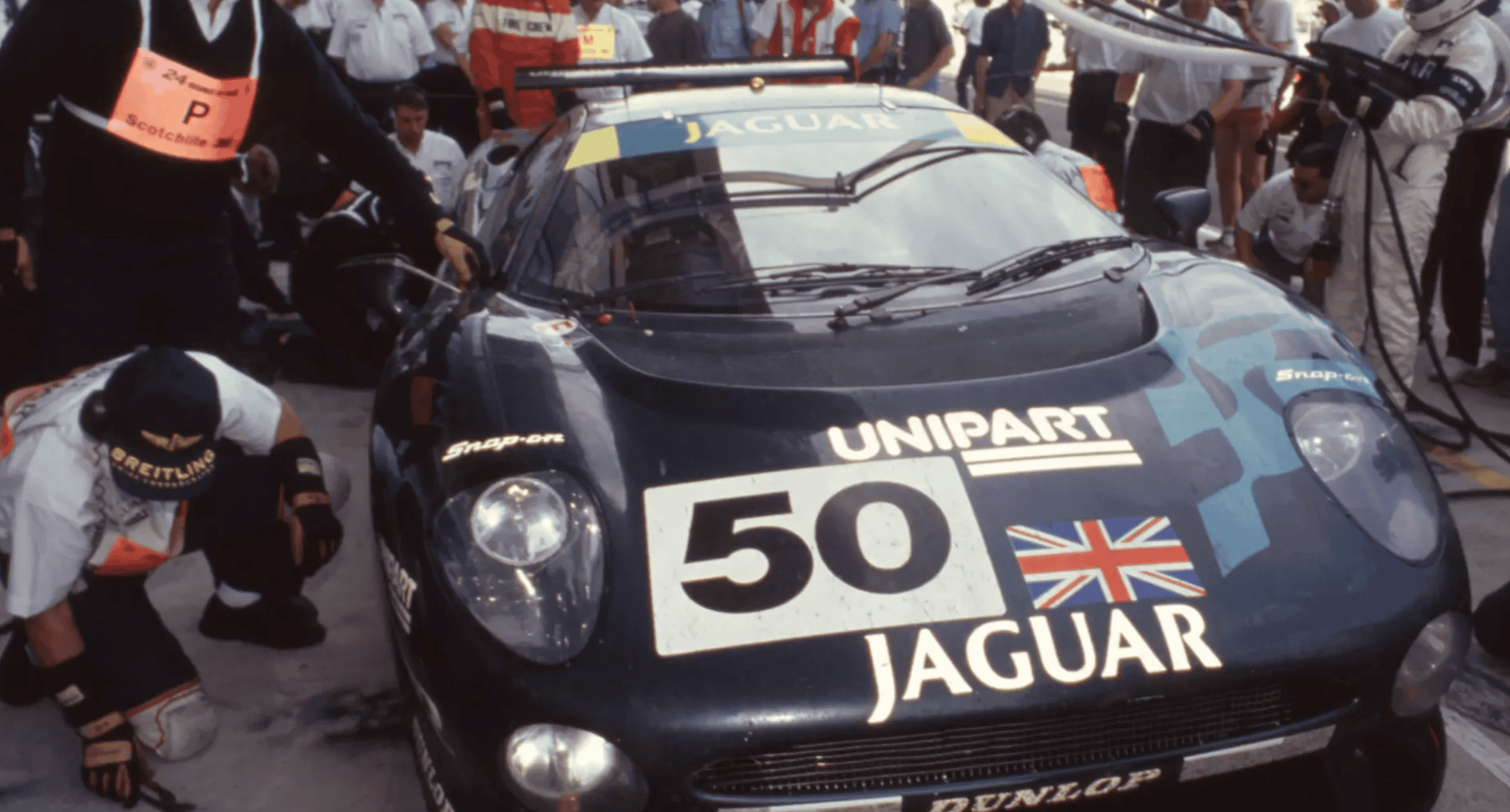
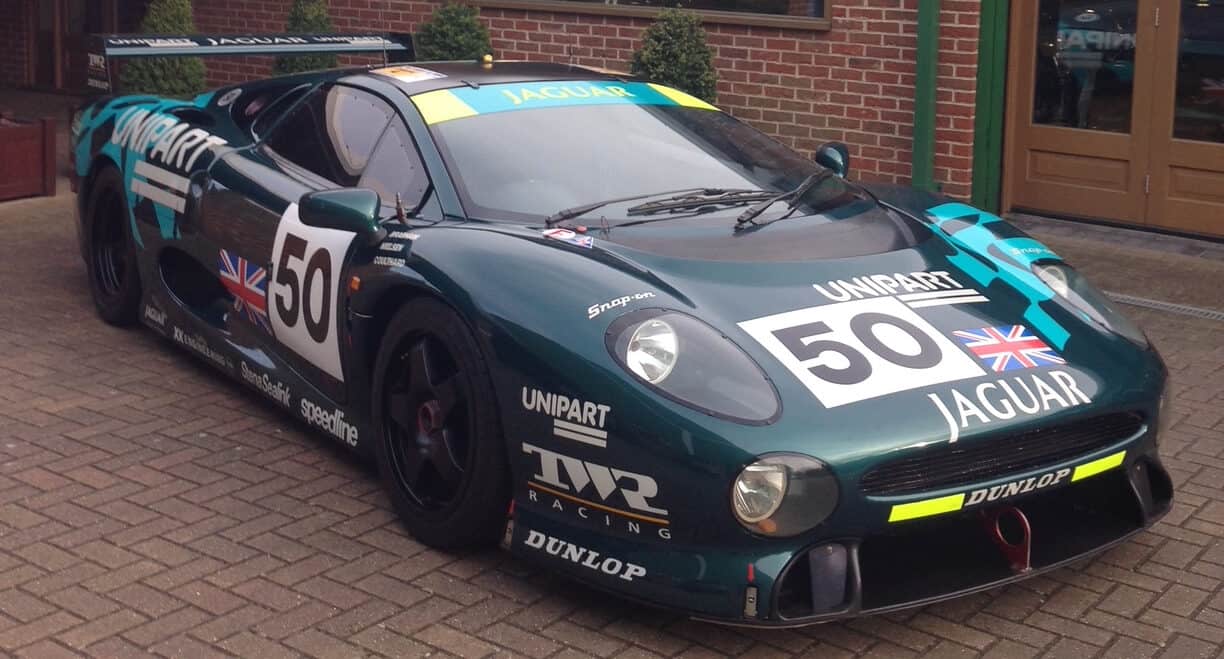
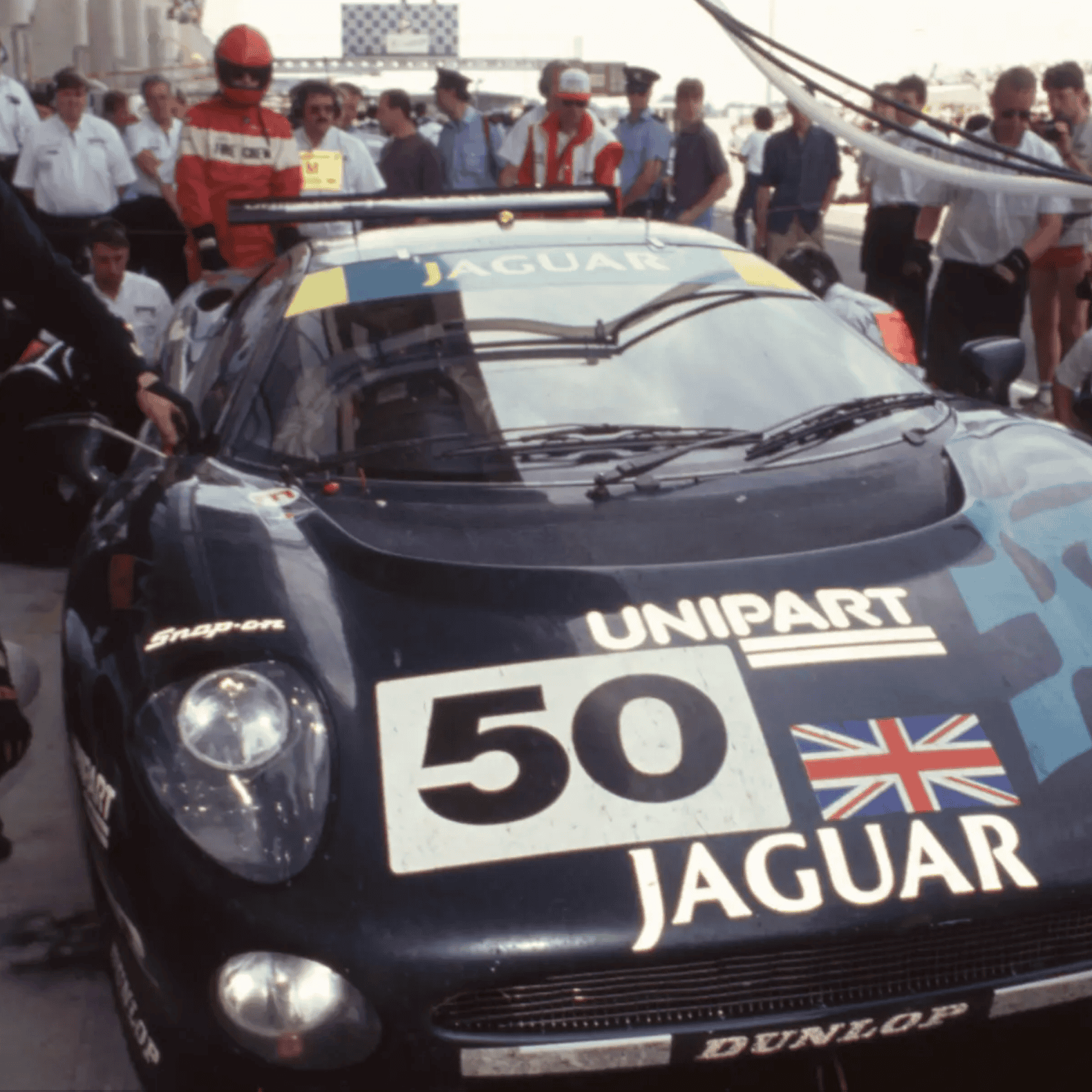
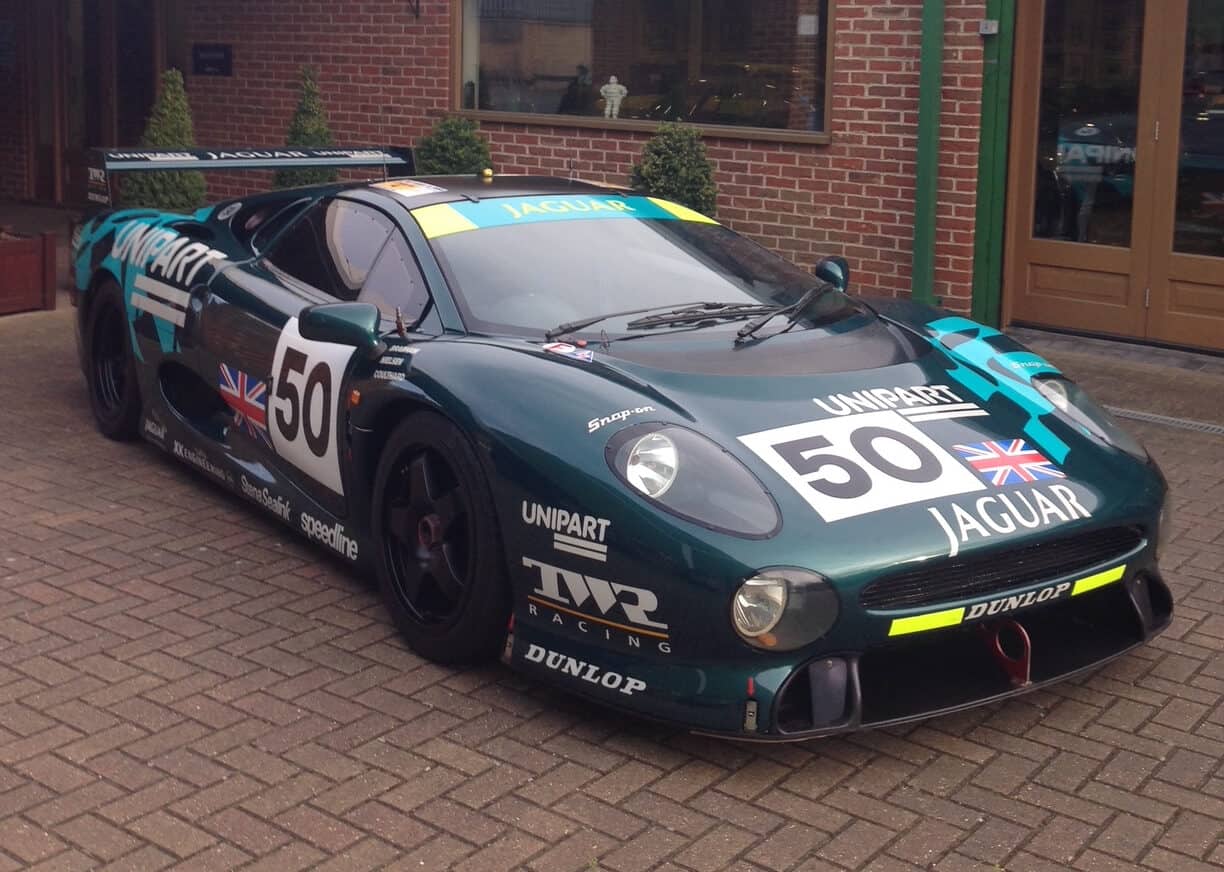
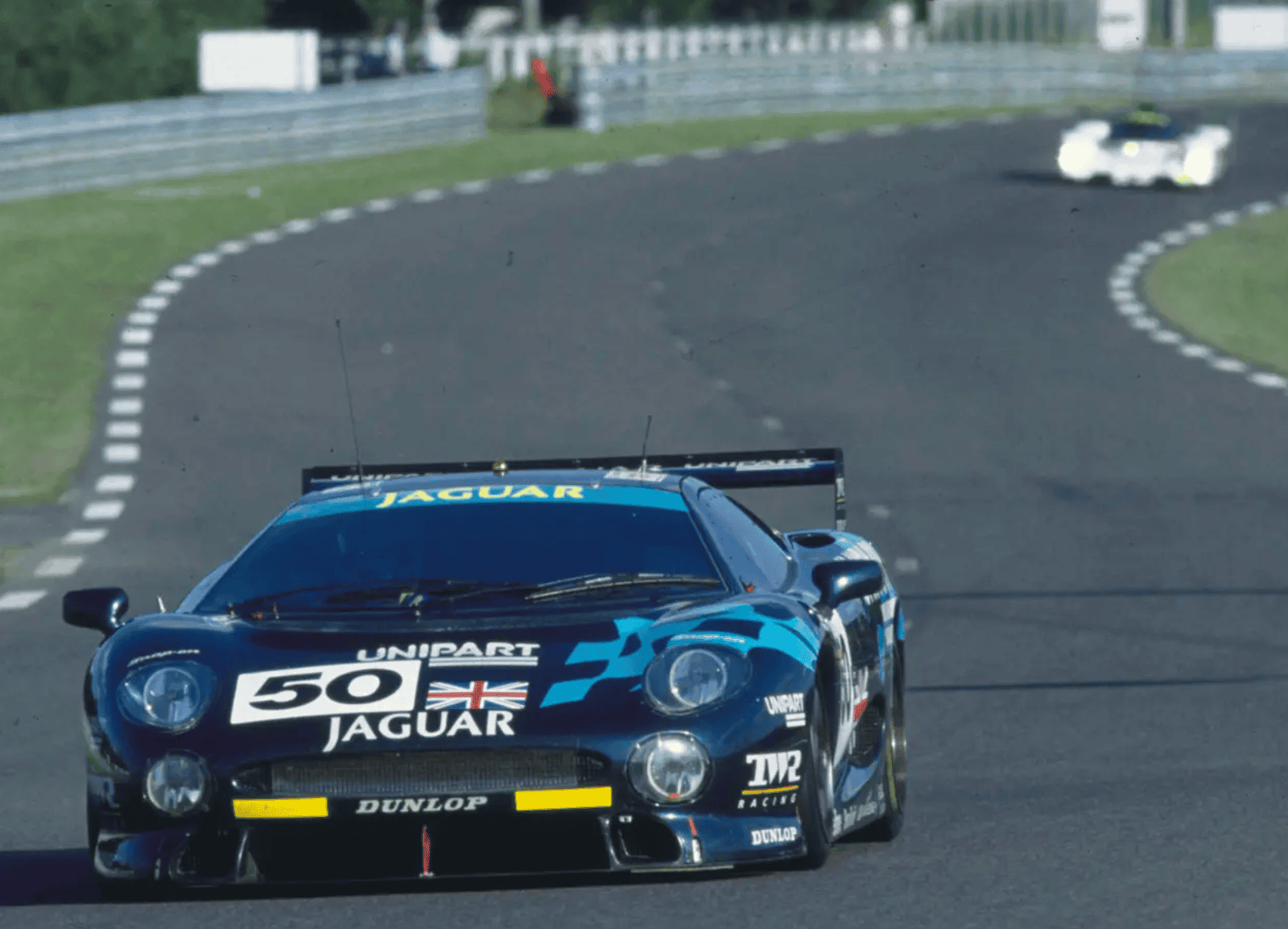
While a comfortable GT victory marked the model’s race debut at Silverstone on 9 May 1993, its greatest challenge would come at the Circuit de la Sarthe where, after qualifying strongly, a team of three XJ220 Cs took to the grid. Chassis 002—the example offered here—would be driven by David Brabham, John Nielsen, and future Formula 1 ace David Coulthard, contesting his first—and only—Le Mans race. But long before the starter flag dropped, drama began to unfold
History
One of four works XJ220C LM models constructed by TWR
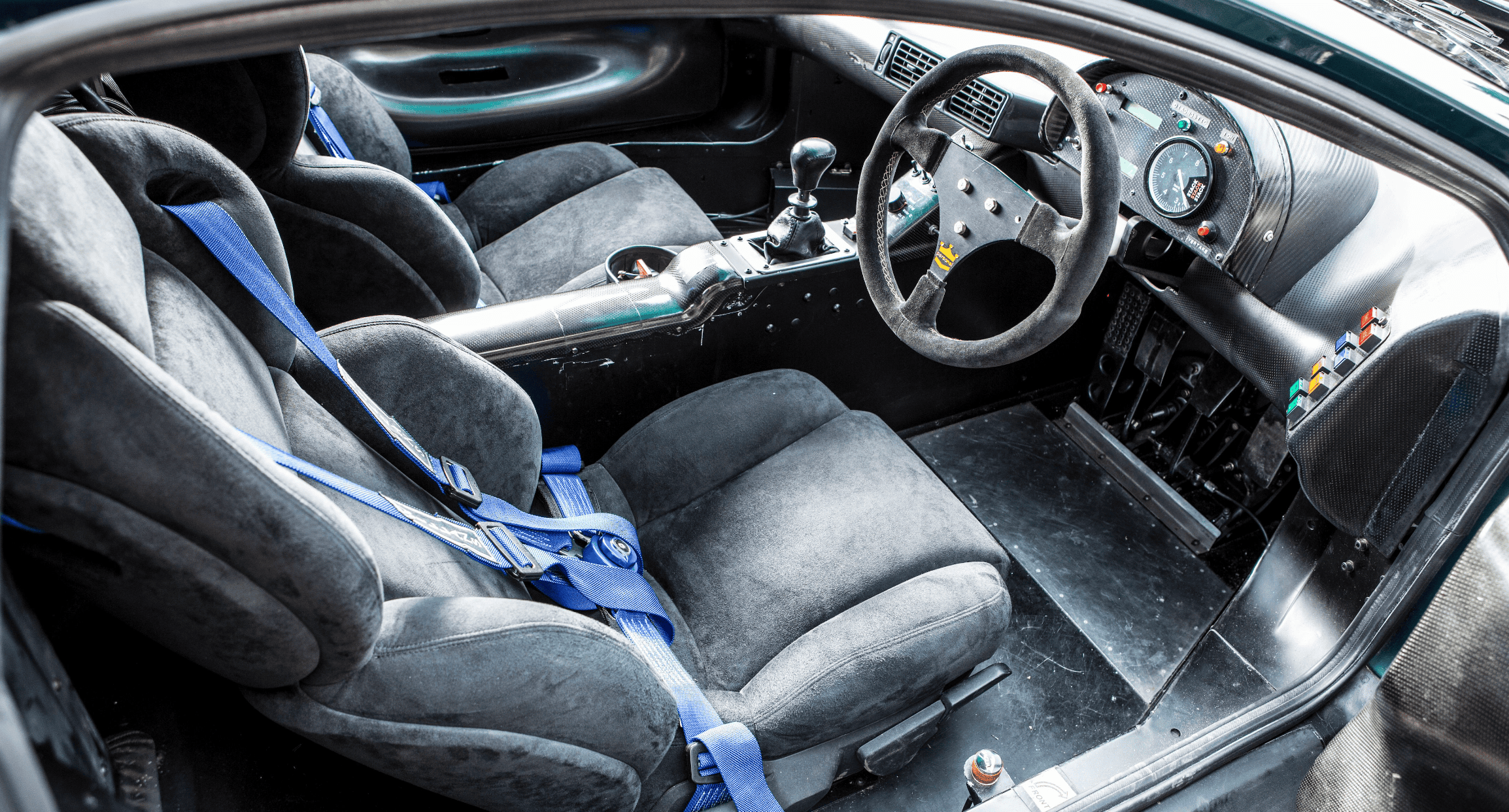
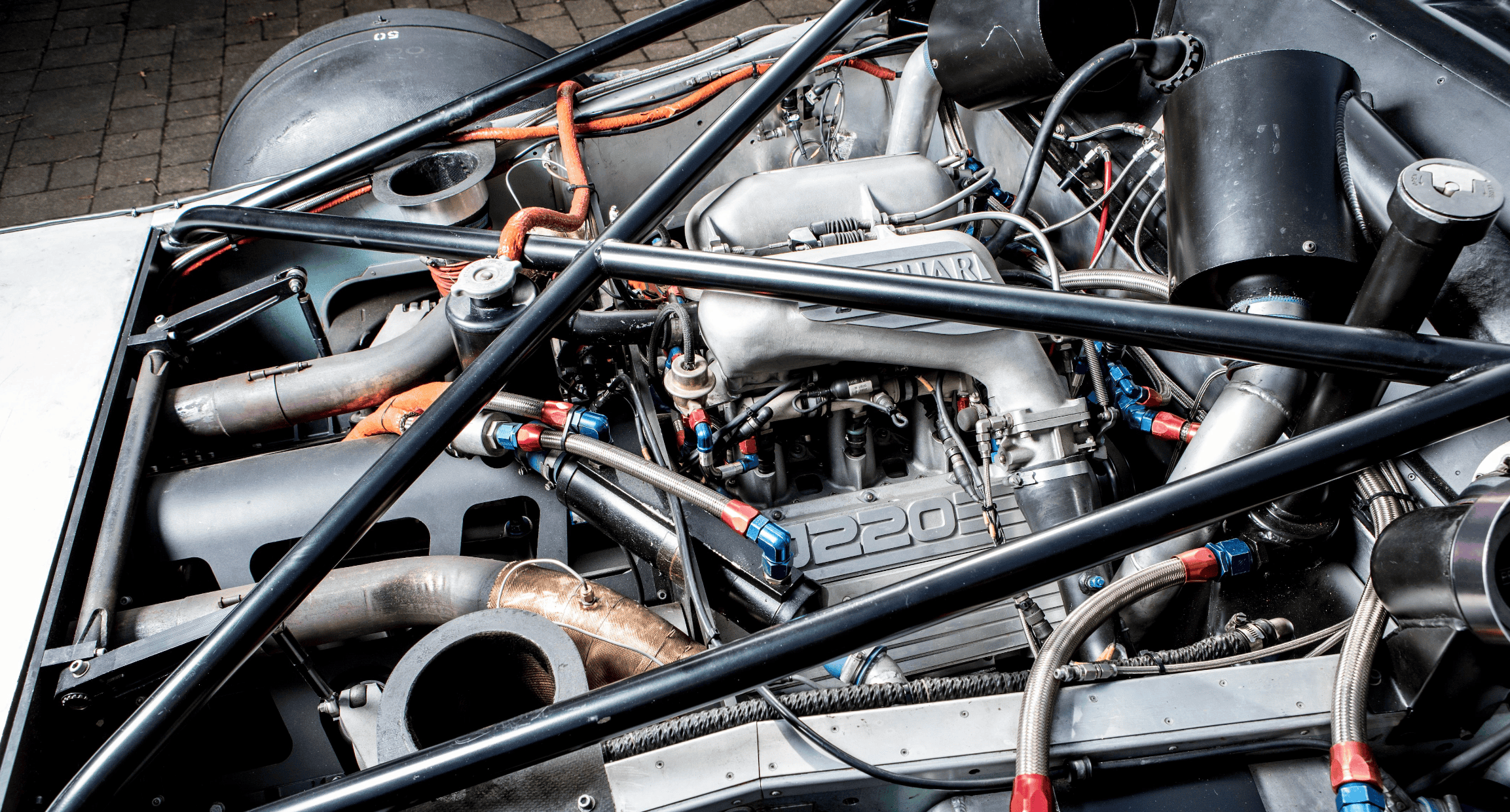
The race-prepared XJ220C machines were considerably lighter than their roadgoing counterparts with a shaving of 400 kilograms helped by fully detachable composite nose, tail, and body panels, which could quickly be removed for access to the car’s mechanical systems. The interior was a stripped-out affair that made extensive use of carbon fibre and was furnished only with a Kevlar racing seat, while the twin-turbocharged 3.5-litre V-6 was uprated to reportedly produce as much as 850 horsepower, although restricted under ACO regulations. Each car was prepared to FIA/IMSA Le Mans specification, enabling the model to be campaigned on both sides of the Atlantic
While testing, ACO officials raised concerns about the legality of the XJ220 C’s exhaust, which was a free-flowing arrangement with no catalytic converters—unlike that of the road car. Though correct for the IMSA category regulations the XJ220Cs were entered under, and despite no rival machines in the GT category running catalytic converters, the argument rumbled on before the Jaguars were reluctantly allowed to take the start under appeal
TWR’s challenge began to falter almost immediately, as the sister car of Win Percy, Armin Hahne and David Leslie suffered catastrophic head gasket failure after just six laps. The British team’s fortunes soon turned though, as Hans-Joachim Stuck’s leading and Works-entered Porsche 911 Turbo S LM suffered an early throttle problem, tumbling down the standings while it was repaired. In an effort to get back into contention, Walter Röhrl pushed too hard, striking a back marker and forcing his own retirement
The Jaguars duly assumed the class lead until the early hours of the morning, when a fuel leak in chassis 002 forced Brabham into the pits for running repairs. Andreas Fuchs continued the charge in chassis 003 until lap 176, when a tyre blow-out threw his car into a gravel trap, enabling Brabham to dramatically work back through the field to cross the finish line in 15th overall and 1st in class. Sadly, the celebrations would prove short lived. A month after their famous victory, the three Jaguars were disqualified on a second technicality: their appeal, which the FIA had supported and upheld, had apparently not been lodged in time
Following its historic outing at Le Mans, chassis 002 returned to Tom Walkinshaw Racing before being sold to Brunei. It returned to the United Kingdom in 1999, remaining in a significant private collection before being acquired by the consigning owner in early-2018. The Jaguar has notably participated in numerous demonstration events, including the Goodwood Festival of Speed in 2000 and 2011.
A Jaguar legend of immeasurable significance, chassis 002 represents the last occasion that the British manufacturer would taste victory at the Circuit de la Sarthe. This highly original and much celebrated example would be eligible for GT1 demonstrations, Endurance Racing Legends and major concours. This remarkable and important XJ220 C would make a fine addition to any collection of landmark endurance racers
+ More
Specification
Price
SOLD
Engine Size
3500
No. of cylinders
6
BHP
600
Number Made
4
To enquire about this vehicle or request a viewing, please contact us or complete our enquiry form:
+44 (0) 7522 103 259sales@dylan-miles.com
DM

Subscribe
© 2026 dylanmilesltd. All rights reserved